Reverse engineering with agents: what REA gets right
An open-source MCP server lets coding agents inspect apps and binaries they have no source for, and say what they could not see.
Published
Oct 20, 2026
Authors
Aaydha AI Lab
Read
4 min
Version
1.0
Aaydha AI Lab · SummaryRead this if you only have two minutes
Abstract
REA is an open-source MCP server and CLI that gives coding agents one interface to disassemblers, decompilers, browsers and capture tools, so they can investigate software without its source. It returns findings with evidence and an explicit list of unknowns. In its best-documented showcase, an agent rebuilt a function from the original x86 DX-Ball binary that passes 3,205 test cases and matches all 63 compiled bytes. We look at how it works, what the evidence shows, and what it means for teams building with agents.
Key findings
01REA wraps Hopper, Ghidra, IDA, JADX, browsers and capture tools behind one MCP interface for agents.
02A function rebuilt from DX-Ball’s x86 binary passed all 3,205 original test cases.
03Returning unknowns alongside findings gives agents a clear line between evidence and guesswork.
Original test cases passed
3,205
Compiled bytes reproduced
63 / 63
01What REA is
REA (“Reverse Engineer Anything”) is an open-source MCP server and command-line tool that lets a coding agent such as Claude Code, Codex, Cursor or Gemini CLI investigate software it has no source code for. You point the agent at an app, a binary or a network capture and ask a question in plain language: how does this feature work, what does this function compute, what does this app send over the wire.
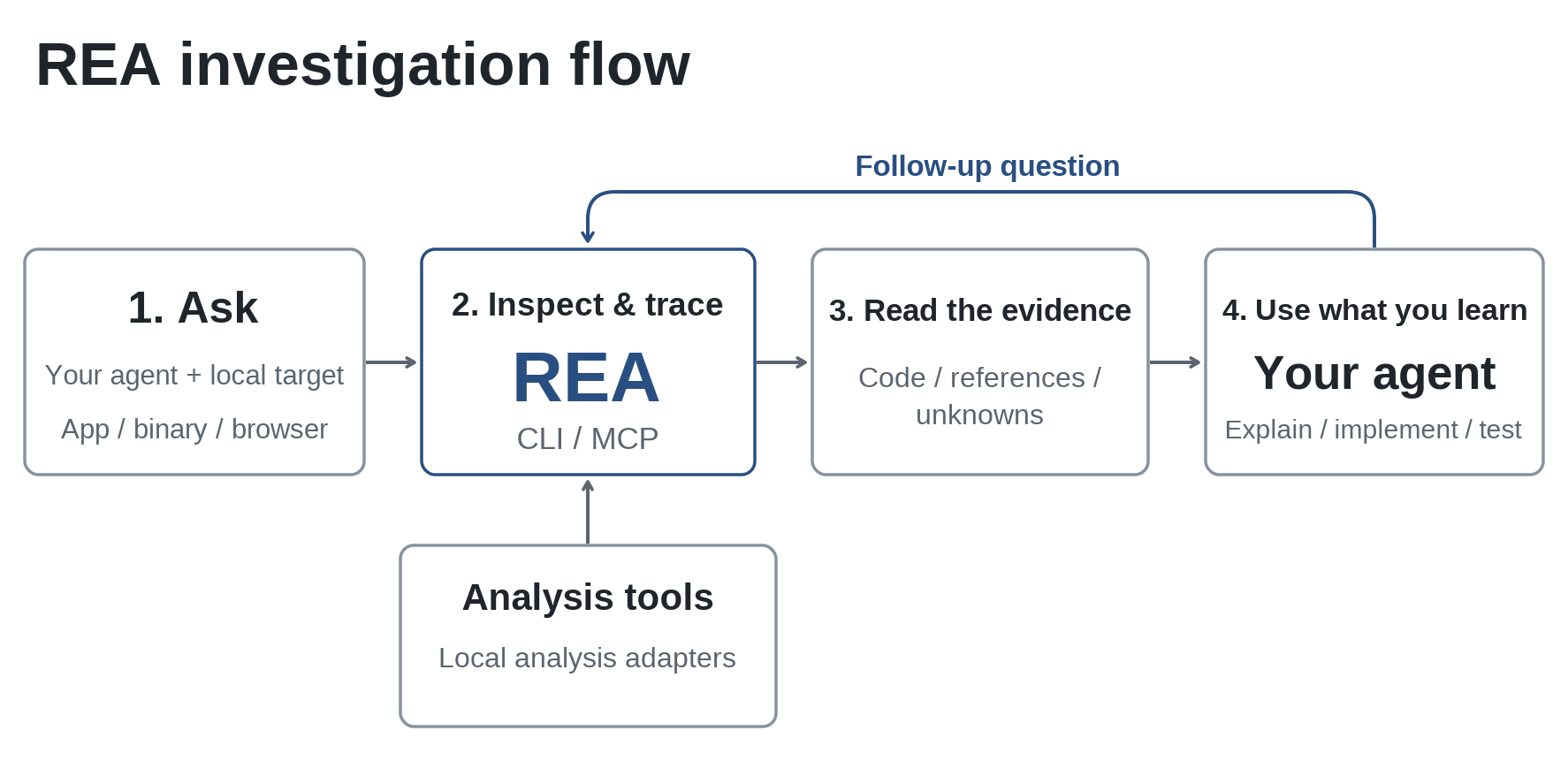
REA does the inspection and hands the agent back findings with their evidence, plus an explicit list of what it could not determine. The agent then explains the behaviour, answers follow-up questions, or writes and tests its own implementation.
How an investigation runs: the agent asks, REA traces the target and returns evidence and unknowns, the agent explains or builds. Image: REA (morluto/rea), MIT licence.
02How it works
REA does not try to be a disassembler. It wraps the tools reverse engineers already use and gives an agent one consistent interface to them over MCP:
Native binaries through Hopper, Ghidra or IDA (or GNU objdump and Rizin): pseudocode, assembly, strings, symbols, calls and references.
Managed and mobile code: .NET assemblies, Android APKs and devices via JADX and ADB, Flutter apps, Unity IL2CPP metadata, Go and Rust binaries.
JavaScript and Electron apps: modules, imports, source maps, IPC and native add-ons, with no native engine needed.
Everything around the code: websites through a Chrome-family browser, HAR and SAZ captures, pcap files, firmware images, WASM, EVM bytecode, SQLite databases, model files (GGUF, safetensors), recorded Linux crashes and live process behaviour.
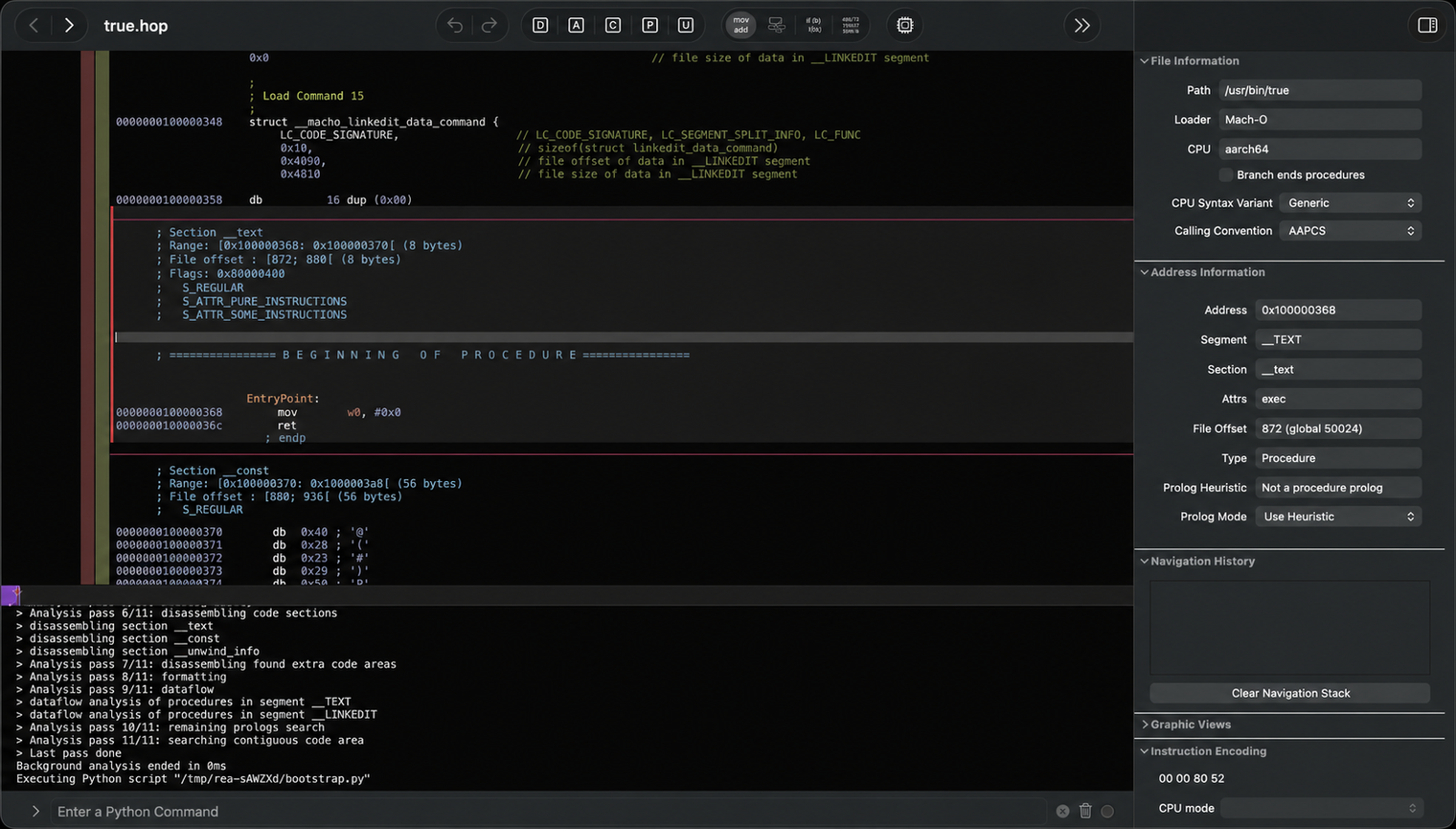
Analysis runs locally. The same workflows are available as plain CLI commands, for example rea analyze-javascript-application <path> --json, so they can sit in scripts as well as agent sessions.
REA launching its analysis bridge inside Hopper while inspecting a native binary. Image: REA (morluto/rea), MIT licence.
03The evidence
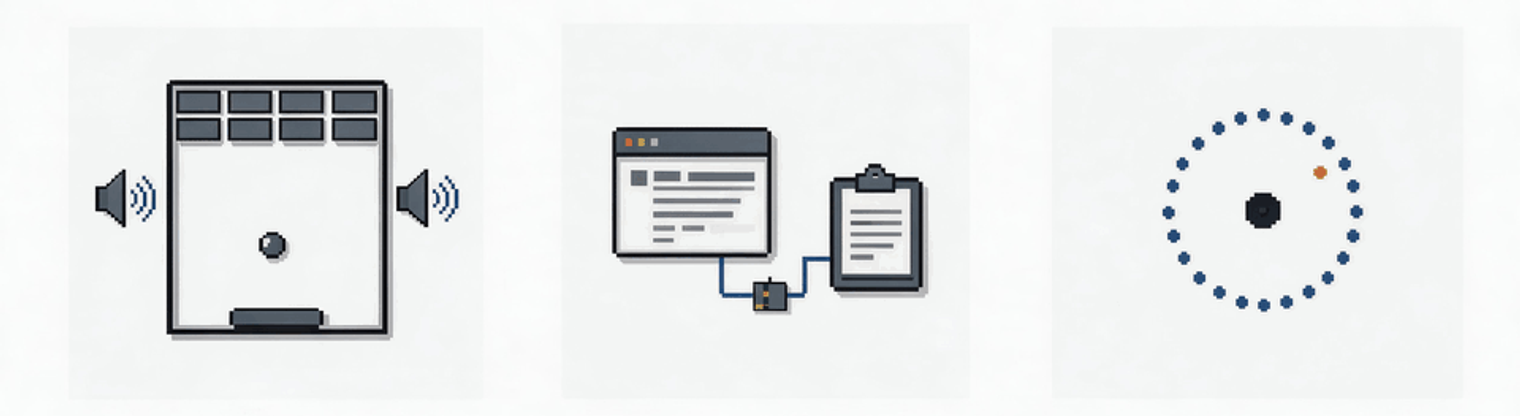
The project’s strongest claim comes from one of its showcases. Working from the original x86 build of the game DX-Ball, an agent used REA to reconstruct the function that calculates stereo sound pan. The rebuilt version passes all 3,205 test cases taken from the original binary and reproduces all 63 bytes of the compiled function.
The other two showcases, the Notion clipboard bridge and the TH04 bullet-ring pattern, demonstrate the explain-then-rebuild loop but publish no numbers. There is no independent benchmark yet, so treat the DX-Ball result as one well-documented case, not a success rate.
The project’s three showcases: DX-Ball sound pan, Notion clipboard bridge and TH04 bullet ring. Image: REA (morluto/rea), MIT licence.
04Why the design matters
Two choices make REA more useful to an agent than a raw disassembler:
It returns unknowns, not just answers. Agents tend to fill gaps with confident guesses. A tool that says what it could not see gives the agent, and the person reviewing its work, a clear boundary between evidence and inference.
Verification is part of the loop. The DX-Ball result is convincing because the rebuilt function was tested against the original, not just read and described. That is the habit worth copying for any agent that explains code it did not write.
This matches a pattern we keep seeing in agent tooling: the model is rarely the limit. The quality of the tools it can call, and how honestly they report uncertainty, decide whether the output can be trusted.
05Use it responsibly
Reverse engineering is legal for many purposes, such as interoperability, security research and understanding software you own, but licences and terms of service differ. Analyse only software you are allowed to inspect, and do not copy protected code or assets into your own product. REA itself is MIT-licensed; commercial engines such as IDA Pro, Hopper and JEB need their own licences, which REA does not provide.
06What this means for your product
Before building a feature you have seen elsewhere, an agent with REA can show you how it actually works.
Ask agent tools to report what they could not determine, and review those gaps first.
Verify any rebuilt behaviour against the original with tests, not by reading the explanation.
Check licences and terms before analysing third-party software.
07Limits of this study
This note reviews the project’s own README and showcases; we have not benchmarked REA ourselves. Only one showcase publishes numbers, and results on large, obfuscated or packed targets may be very different.
08References
REA: Reverse engineer anything with agents. morluto, 2026. Link